

Leaflet Details
| Title | Patch Testing |
| Department | Dermatology |
| Author(s) | Kamaldeep Sidhu |
| Review Date | November 2023 |
| Next Review | November 2025 |
| Download | A4 Handout PDF |
| Accessibility Options | Click on the Recite Me button to show our accessibility resources |
Patient Information
What is Patch Testing?
The aim of patch testing is to try to discover whether you are allergic to any substance that is coming into contact with your skin. The substance may be found in lotions, perfumes, jewellery, hair dye, clothing, shoes, plants, medicaments, and numerous other sources.
What does patch testing involves?
You will have to attend hospital for 3 visits within one week. It is important that you attend all these appointments. If you are unable to attend any of these appointments, please ring the department (01932 726667) to cancel your patch tests.
First Visit - Monday
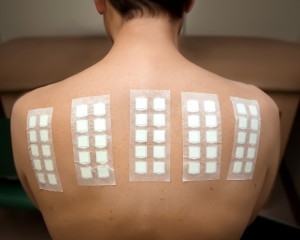
It will involve application of the patch tests.
The patch tests consist of hypoallergenic strips of tape. On each strip are 10 small chambers, each of which contains a different substance.
The patches are usually applied to the back, and the position of each chamber is marked with a special skin marker pen.
The tests are applied to the back, which is a flat area; therefore, the patches usually stick well. The patches stay in place for the next 48 hours, which means you will keep the patches on your skin until Wednesday morning.
Second Visit - Wednesday
To assess the initial results.
You should take the patches off completely and throw the paper strips away. You will not normally have any further patches applied. No conclusions can be drawn from the patch test at this stage.
Third Visit - Friday
The final reading takes place. The doctor or nurse will discuss the results with you and give you information regarding any of the substances to which you have reacted.
Very occasionally late reactions can occur. If this occurs, please telephone the clinic (01932 723322) for advice.
Do I need to bring anything with me to clinic?
It is helpful if you can bring with you (in their normal labelled containers), anything that you suspect you may be allergic to or which aggravates your rash. A list of the items and, if they are work related, any Health & Safety data sheets will also allow us to assess their relevance. It may not be suitable to patch test you with the substances, but this will be assessed in the clinic.
Can I bathe or shower whilst I am being patch tested?
You should not bathe or shower whilst the patch tests are in place as they may come off and the tests will be invalidated. You need to keep your back completely dry until after the third visit so that the patches and marked areas are not washed off.
Should I wear something special over the patch tests?
We suggest that you wear something that washes easily. The pen may mark clothes, it is advisable to wear old, preferably dark coloured tops. At night wear an old T-shirt or nightie to prevent the patches coming off.
Can I carry on as normal when the tests are in place?
Generally yes, but avoid excessive bending and twisting movements, as the patch test may come unstuck. Also avoid any strenuous exercise. Be careful for the first two to three hours after application. This is when the patches are most likely to come off.
What happens if I feel the tape is coming unstuck?
If a corner or edge of one of the patches becomes loose, please tape it back with micro-pore tape.
Are patch tests painful?
There are no injections involved in patch testing. However, the patch test may feel itchy and a little strange stuck on the back. If the itching is severe the patch test may be removed. However, you will need to note the chamber number which you think caused the reaction.
Any contraindications or precautions for patch tests?
Patch tests are not advisable if you are pregnant or breast feeding. If you are taking any regular medication, please let us know. You do not need to stop antihistamines prior to and during patch testing. Oral steroids should be stopped or reduced if taking over 15 mg 2 weeks prior to patch testing. Topical corticosteroids onto the test area on the back should be stopped three to four days before the test.
Moisturising creams should be stopped the day before the tests to ensure the patch tests can stick to your back. Please avoid sunbathing or sun beds for two weeks prior to your patch tests as sun exposure or tanning may make the results of the patch tests unreliable. Excessive hair on back should be trimmed or shaved prior to your first appointment as it may prevent the sticking of the patches to skin.
Limitations of patch testing?
Patch tests are only helpful to investigate allergies which are due to direct or airborne contact with substances outside the body. It does not detect allergies related to diet or anything which is inhaled and may result in sneezing, asthma, or hives.


