

Leaflet Details
| Title | Sick Day Rules |
| Department | Diabetes |
| Author(s) | Diabetes Team |
| Review Date | January 2024 |
| Next Review | January 2026 |
| Download | A5 Booklet PDF |
| Accessibility Options | Click on the Recite Me button to show our accessibility resources |
Patient Information
How does illness affect your blood glucose?
During an illness or infection, the body will release extra glucose into your bloodstream in a bid to help combat the illness. When you are ill your body may need more insulin. Your blood glucose levels can rise in response to illness even if you are not eating.
This may make you feel thirsty and pass urine more frequently, which can make you dehydrated. Your body needs more insulin, and you may need to increase the dose to combat this.
If you have Type 1 diabetes and you are not having enough insulin, your body will produce ketones when you are unwell, which can result in a serious condition called diabetic ketoacidosis (DKA).
It is possible to manage your diabetes during illness effectively and keep your blood glucose levels down by adjusting your insulin. The advice in this leaflet is to help you with this.
Please note that INSULIN SHOULD NEVER BE STOPPED as the body always needs it although dose adjustments may be needed.
BE PREPARED!
Make sure you have a good supply of the following in case you are unwell:
- Unopened and in date testing strips and urine or blood ketone sticks (if on insulin).
- Sweet food and drinks such as small cartons of long-life orange juice, fun sized jelly baby bags and a bottle of Lucozade.
- Stock of foods like soup or ice cream.
Managing Type 1 diabetes when you are ill
Rest: Strenuous activity should be avoided as this can increase the glucose levels during illness.
Symptoms: Treat symptoms such as high temperature or a cough with basic medicines such as painkillers. Cough medicines and other over the counter preparations do not have to be sugar free varieties if they are taken in small quantities.
Eating & Drinking: Try to drink at least 2.5L of sugar free fluid in 24 hours to prevent dehydration (approx. 100ml hour). Try to eat as normal but if you cannot manage your usual meals, replace these with light and easily digested foods unless you have diarrhoea and vomiting.
See table below for a list of alternative food options:
| Type of food alternative | Amount (Each serving provides approximately 10g of carbohydrate) | ||
| Lucozade Energy | 50 mL | 2 fl oz | ¼ glass |
| Fruit Juice | 100 mL | 4 fl oz | ½ glass |
| Cola (NOT diet) | 100 mL | 4 fl oz | ½ glass |
| Lemonade (NOT diet) | 150-200 mL | 5-7 fl oz | ¾ - 1 glass |
| Milk | 200 mL | 7 fl oz | 1 glass |
| Soup | 200 mL | 7 fl oz | 1 mug |
| Ice cream | 50g | 2 oz | 1 large scoop |
Be prepared - make sure you have sugary fluids at home in case you do not feel like eating.
Insulin: Doses may need to be adjusted, depending on the trend seen on blood glucose testing. Glucose testing should be 2-4 hourly until glucose levels are stable. Insulin must never be stopped as illness increases the body’s insulin requirements.
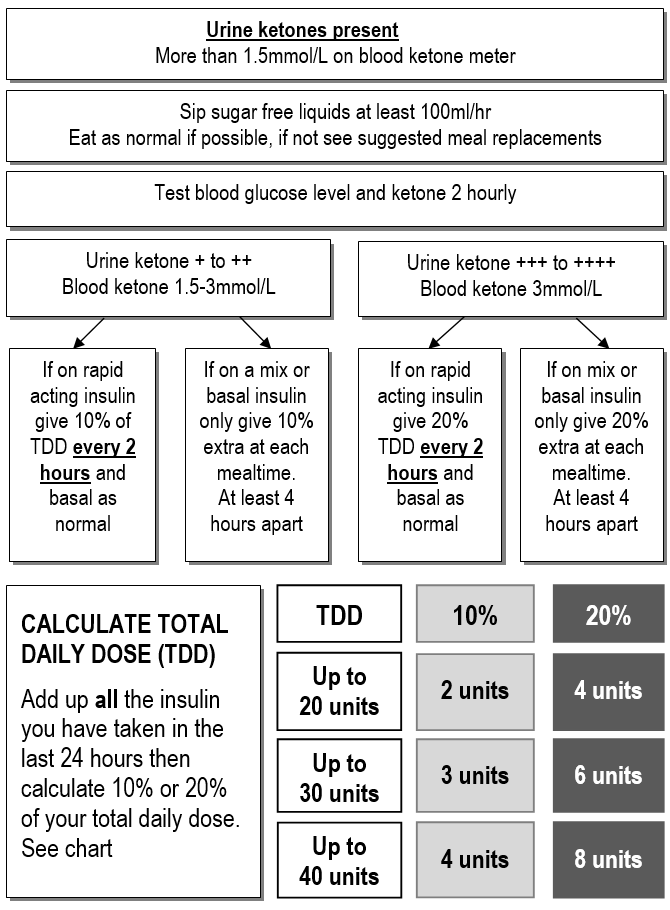
See charts below for Managing Type 1 diabetes when you are ill.
Ketones: Ketones are an acid made when the body breaks down fat to use as energy when it cannot use carbohydrates. Urine ketones should be tested for on each trip to the toilet when glucose levels are above 13mmol/L. Alternatively. if you have an appropriate meter, blood ketones could be measured 2 hourly.
If ketones do not go away and build up, they can alter the acidity of the blood. This is known as diabetic ketoacidosis (DKA). This is potentially life threatening and requires URGENT medical attention.
The signs and symptoms of DKA:
- Nausea and vomiting
- Abdominal pain
- Deep rapid breathing
- Breath smelling like pear drops or nail varnish
- Drowsiness
Follow the advice on the charts and you develop symptoms and or ketone levels are increasing, you must seek medical attention.
Managing Type 1 diabetes when you are ill
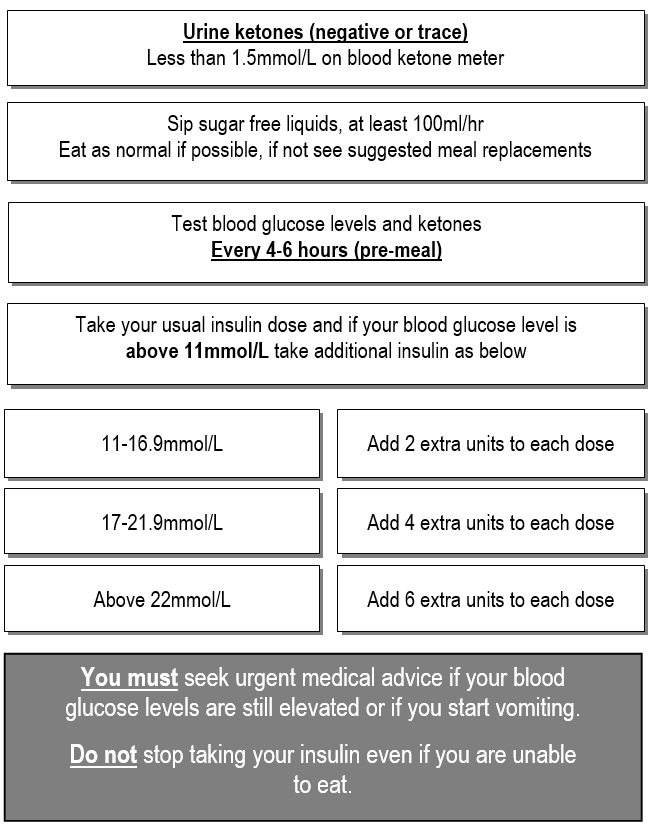
Managing Type 1 diabetes when you are ill
Managing Type 2 diabetes when you are ill
Acute illness such as diarrhoea and vomiting can be associated with dehydration, being unable to take usual diabetes tablets and increased glucose levels.
Rest, symptoms and eating and drinking: Advice as for Type 1 diabetes.
Tablets: You should take your tablets and normal dosage providing your carbohydrate intake continues in solid or liquid form. It is recommended that you check your blood glucose levels at least 4 hourly.
- If you are taking metformin, you should be cautious of continuing with this medication during periods of dehydration or acute illness. It is advised that you should stop metformin if you are vomiting and / or have diarrhoea.
- Continue to take other tablets for diabetes such as Gliclazide / Glimepiride even if not eating but be aware that they may increase the risk of your blood sugar level dropping too low (hypo) so test your blood glucose levels to make sure your readings are not less than 4 mmol/L.
- If you are taking Dapagliflozin / Canagliflozin / Empagliflozin (SGLT2 Inhibitors) and you are vomiting or have diarrhoea, you should stop the medication. Only restart medication once you are fully recovered or asked to do by your GP / Doctor.
- If you are taking other tablets such as Linagliptin / Saxagliptin / Sitagliptin / Vildagliptin or Pioglitazone continue to take them.
- If you are on a GLP-1 agonist such as Byetta (Exenatide) / Victoza (Liraglutide) / Lyxumia (Lixisenatide) / Bydureon (Exenatide once weekly) / Trulicity (Dulaglutide) and develop abdominal pains, nausea and vomiting, stop the medication immediately and seek medical attention.
- You may need to increase the dose of your tablets or even need insulin injections for a short time if your blood sugar levels are high while you are ill. This is especially relevant if you are ill enough to need to be admitted to hospital or if you need steroids.
- Monitor your blood glucose levels at least 4 times a day.
- If you develop abdominal pain, nausea, and vomiting, stop the medication immediately and seek medical help.
Insulin: If you are on insulin, you may need to adjust your dose.
If you are on insulin, please only take as directed by your health care professional using the device given to you.
Insulin should never be withdrawn from a cartridge or pen using a needle and syringe.
(See chart below for managing Type 2 diabetes when you are ill)
Managing your Type 2 diabetes when you are ill
When to call your GP, diabetes specialist nurse or healthcare professional for immediate help
- If you are pregnant
- If your blood glucose levels are constantly higher than 15 mmol/L despite following the advice in this leaflet, or you have positive ketones and cannot adjust your insulin to manage these.
- If you cannot keep food / fluids down for more than 4 hours.
- If you have acute abdominal pain, increasingly drowsy or shortness of breath.
- If despite taking the advice in this leaflet, your symptoms are getting worse.
Managing blood glucose levels after illness
Blood glucose levels may take a few days to stabilise even after you feel back to normal, so we advise that you keep testing more often than usual until your blood glucose levels settle down.
Who to contact for advice
| Community Diabetes Specialist Nurses (Surrey Area) | 01932 723315 (Mon - Fri) Answer phone for messages |
| In patient Diabetes Specialist Nurses | 01932 722844 (Mon - Fri) Answer phone for messages |
Out of hours helpline: Call 111 (when it is less urgent than 999) or your GP out of hours service.
References
TREND-UK (2013)
Diabetes: What to do when you are ill.
Available at: https://trenddiabetes.online/
Diabetes Research & Wellness Foundation (2014)
Managing Diabetes when you are ill.
Available at: https://www.drwf.org.uk/
Diabetes.co.uk: The Global Diabetes Community (2013)
Diabetes and Being Ill - Diabetes and Illness.
Available at: https://www.diabetes.co.uk/diabetes-and-illness.html


