

Leaflet Details
| Title | Healthy Eating for Children and Young People with Type 1 Diabetes |
| Department | Dietetics |
| Author(s) | Paediatric Diabetes Dietitians |
| Review Date | August 2025 |
| Next Review | August 2027 |
| Download | A5 Booklet PDF |
| Accessibility Options | Click on the Recite Me button to show our accessibility resources |
Patient Information
What is diabetes?
Diabetes is a condition where the body does not produce enough insulin to keep blood sugar (blood glucose) levels within the normal range. Insulin is a hormone made by an organ called the pancreas. Insulin is needed to move glucose from the blood into the cells of the body where it can be used for energy. With a lack of insulin, the blood glucose levels rise. This can result in you feeling generally unwell, tired and thirsty.
Glucose comes from the carbohydrates that we eat, whether from sweet foods or from the digestion of starchy foods such as bread, potatoes, pasta, yams, chapattis, cereals and rice. The liver also makes glucose.
Normally after a meal that includes carbohydrates, our blood glucose level rises, and insulin is released into the blood. When our blood glucose level falls (for example during physical activity), the level of insulin falls.
Insulin therefore plays a vital role in regulating the level of glucose in our blood, particularly in preventing the blood glucose level from rising too high.
Usually, in children who develop diabetes most of the insulin-producing cells in the pancreas do not work. Treatment is with insulin injections and a healthy eating plan.
What is Healthy Eating?
Nothing is forbidden just because your child has diabetes, but food choices are an important part of diabetes management.
Children and young people with diabetes need the same amount of energy and nutrients as all other children and young people. They should have a healthy balanced diet that includes fruit, vegetables and starchy foods which provides the energy and nutrients they need to grow and develop. It is important that they aim for a diet that is low fat, low salt, low sugar and high fibre as they get older. This advice is the same for everyone’s future health, so the whole family can benefit from this.
The ‘Eatwell Guide’ (figure below) represents the proportions of the food groups in a balanced diet.
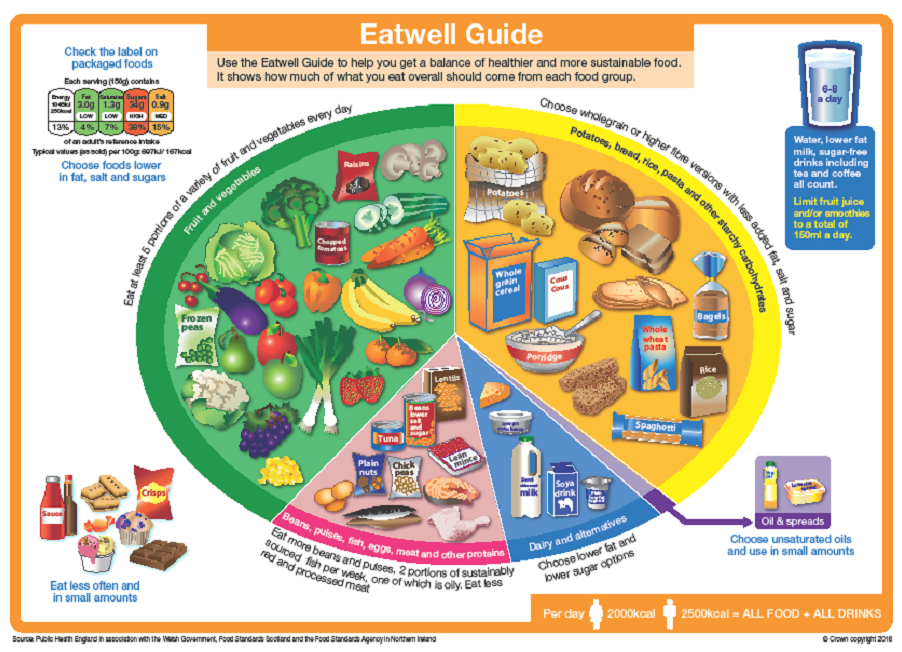
Guidelines to healthy eating
- Aim for 5 portions of fruits or vegetables per day Fruits and vegetables are high in fibre which helps with blood glucose control, protects against heart disease, strokes and cancers.
- At each meal include starchy carbohydrate foods such as: bread, pasta, chapattis, potatoes, yam, noodles, rice and cereals. These foods break down into glucose and will increase the blood glucose levels even though they are not sweet in taste. Starchy carbohydrates should not be seen as ‘bad’ foods as they act as fuel for the body to provide energy and help to promote normal growth.
- Wholemeal and wholegrain versions of foods contain more fibre and nutrients, which help maintain a healthy bowel and healthy body. Children under 5yrs should have both ‘white’ and wholegrain versions of these foods.
- Meat, fish, beans, eggs and nuts are important for growth and repair; protein foods are important sources of iron and zinc.
- Milk and dairy foods: These foods are important to build strong bones and teeth because they contain calcium. Full fat versions of milk should be used if your child is under 2, otherwise try to go for lower fat dairy options for the whole family.
- Salt: Too much salt can lead to high blood pressure, which can damage the kidneys. Beware of hidden salt in processed foods; sometimes salty foods like crisps are eaten more often when avoiding sugary foods.
Nutritional Information
The traffic light system for ‘front of pack’ labeling, while still voluntary, has been around for a while now and is an easy way to check at a glance how healthy a food is. The labels show how many calories are in the food or drink and are also colour coded to show whether the food is low (green), medium (amber) or high (red) in fat, saturated fat, sugar and salt. The information on the front of the pack also tells you how the portion of the food contributes to the Reference Intake (RI) of an adult. Try to choose foods with more greens and ambers and fewer reds.
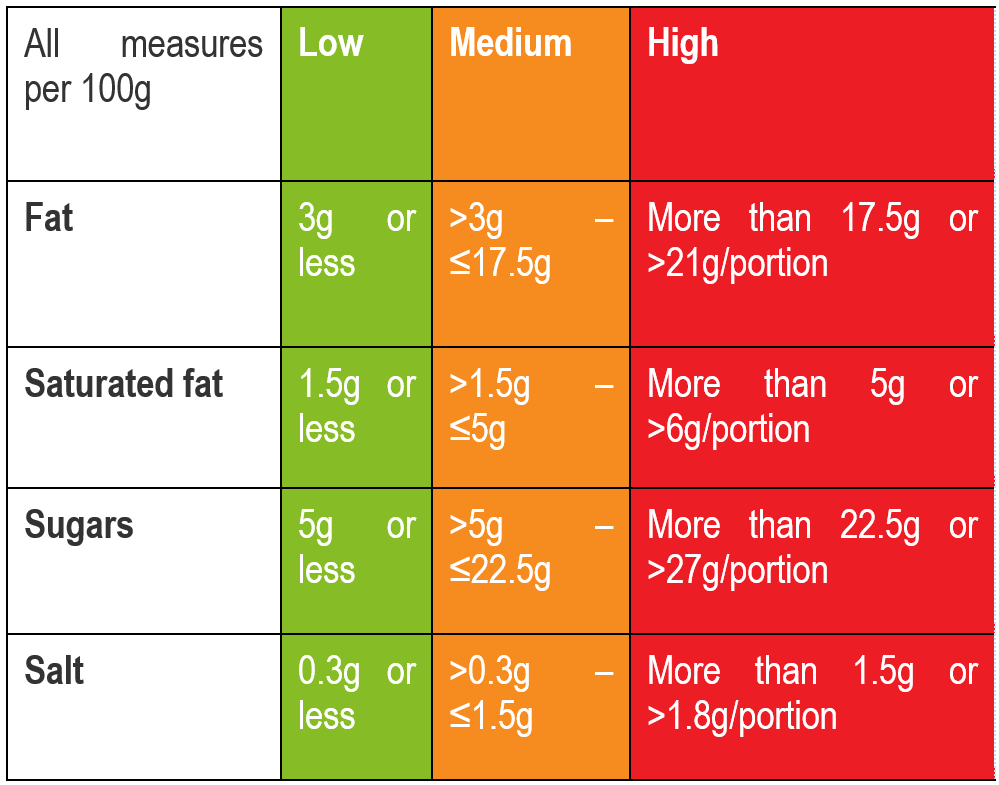
And, if the traffic lights aren’t available, check the ‘per 100g’ column on the ‘back of pack’ nutritional label.
How is blood glucose (sugar) made?
All food is broken down in the stomach and small intestines to simple units by the process known as digestion. These simple units are then able to pass into the blood.
Protein containing foods are broken down into simple units called amino acids. These do not directly affect your blood glucose levels.
Fats are broken down into simple units called fatty acids. These do not affect your blood glucose levels.
Carbohydrate containing foods are broken down to simple units of glucose. The glucose passes into the blood stream and causes the blood glucose level to rise.
Insulin allows this glucose to pass into the cells to provide energy.
The rate at which this occurs is known as the ‘Glycaemic Index’ (GI). This is important in controlling blood glucose levels especially in Diabetes.
- Low GI - Foods broken down slowly will raise the blood glucose slowly
- High GI - Foods broken down quickly will raise the blood glucose quickly
Low GI foods
A healthy diet for people with diabetes should contain starchy carbohydrate at each meal, and many starchy carbohydrates have a low GI. Some other carbohydrate foods also have a low GI and are good choices as part of a healthy diet.
Some examples of low GI foods include:
- No added sugar Muesli, porridge oats
- Multigrain breads
- Baked beans, lentils / pulses
- Apples, bananas, oranges, pears
- Pasta / spaghetti / noodles
- Basmati rice
- Sweet potatoes, new potatoes
High GI foods
High GI foods are broken down very quickly to simple units and so will raise blood sugar levels quickly. When you have diabetes, it is important to keep your blood glucose stable within the normal range. It is therefore advisable to eat food with a high GI in smaller amounts and less often.
Some examples of high GI foods include:
- Sugary foods - some cakes and biscuits, sweets
- White bread
- Instant pasta
- White rice
- Mashed potatoes
As a general rule, the higher the fibre content of the food, the lower the GI. Try to choose foods that are high in fibre. It also helps people feel full for longer and is good for keeping bowel movements regular.
Can I ever eat sweets?
Yes!
There are no foods that should never be eaten - it is really a question of getting the balance right. 2 or 3 sweet treats a week is a sensible guide for all children. The best time to include sweets is at the end of a main meal when lower GI foods taken as part of the meal will help to slow down the rate of absorption of sugar.
Diabetic Foods
There is no need to buy special ‘Diabetic’ foods. They are expensive compared to non-diabetic products. Most diabetic jams, sweets and chocolate contain sorbitol instead of glucose. Sorbitol has a laxative effect and this can cause diarrhoea. These products also tend to be higher in fat as they are lower in sugar and therefore contain more calories.
Snacks
Children who are newly diagnosed with diabetes are usually very hungry and will often have lost weight before they were diagnosed. It is therefore necessary to give snacks containing carbohydrates to help them regain this weight and satisfy their appetite.
In order to monitor the doses of Insulin needed it is important to try and leave it 2 hours after the last meal before a snack is offered. Try to avoid allowing your child to graze as this will make it difficult to accurately assess the insulin doses required.
Snacks for exercise
Carbohydrate containing snacks may be needed before or during prolonged exercise as extra fuel, but insulin can also be adjusted for planned exercise.
Remember it is insulin that is used to control blood glucose levels - not food.
If you have to feed your child lots of snacks to prevent hypo’s then consider decreasing the insulin dose.
If blood glucose levels are high, do not withhold food, consider increasing the insulin dose.
Please contact the Paediatric Diabetes Team for advice.
Carbohydrate counting
Carbohydrate counting can help your child’s diabetes control - but what is it and how does it work?
Carbohydrate counting is a vital part of making the most of intensive diabetes management, whether your child uses injections or a pump .
Carbohydrate counting means that insulin can be individually matched to your child’s food choice at the time of eating.
It means portion sizes can reflect a child’s appetite rather than a fixed amount of carbohydrate to feed a fixed amount of insulin.
Carbohydrate counting can mean more work at first - assessing or weighing foods to calculate the amount of carbohydrate, but it becomes easier as you become more skilled and used to it. As your child becomes older, these skills will need to be shared with them too.
Your Dietitian will teach you how to count carbohydrates soon after diagnosis.
Summary
A well-balanced eating plan is essential to manage diabetes. This will help children and young people grow and develop into healthy adults.
Please ask your dietitian if you have questions about the content of this leaflet.
For further information please see the Diabetes UK web site:
https://www.diabetes.org.uk/
For further information or advice please contact the Paediatric Dietitians at Ashford and St Peter’s Hospital NHS Foundation Trust:
Tel: 01932 723937
E Mail:


