

Leaflet Details
| Title | Home Egg Introduction |
| Department | Dietetics |
| Author(s) | Dr Klara Liddell |
| Review Date | January 2023 |
| Next Review | January 2025 |
| Download | A5 Booklet PDF |
| Accessibility Options | Click on the Recite Me button to show our accessibility resources |
Patient Information
Disclaimer:
This leaflet is designed for children deemed suitable for home egg introduction by their healthcare professional.
Please do not follow this advice unless advised by a healthcare professional.
Home Egg Introduction: Background
Most children with egg allergy grow out of their egg allergy in early life. For children who have had a previous mild reaction to egg (e.g., facial rash or vomiting, but NOT wheezing, throat tightening or floppiness), it is reasonable to try to re-introduce egg at home. This is a guide for parents introducing egg into the diet at home. There may be some variations for individual children, which your doctor or dietitian will explain. Children who have had more severe symptoms may need to have a hospital-based food challenge and may require regular review with a dietitian. This leaflet is NOT suitable for children with previous severe reactions unless under medical supervision.
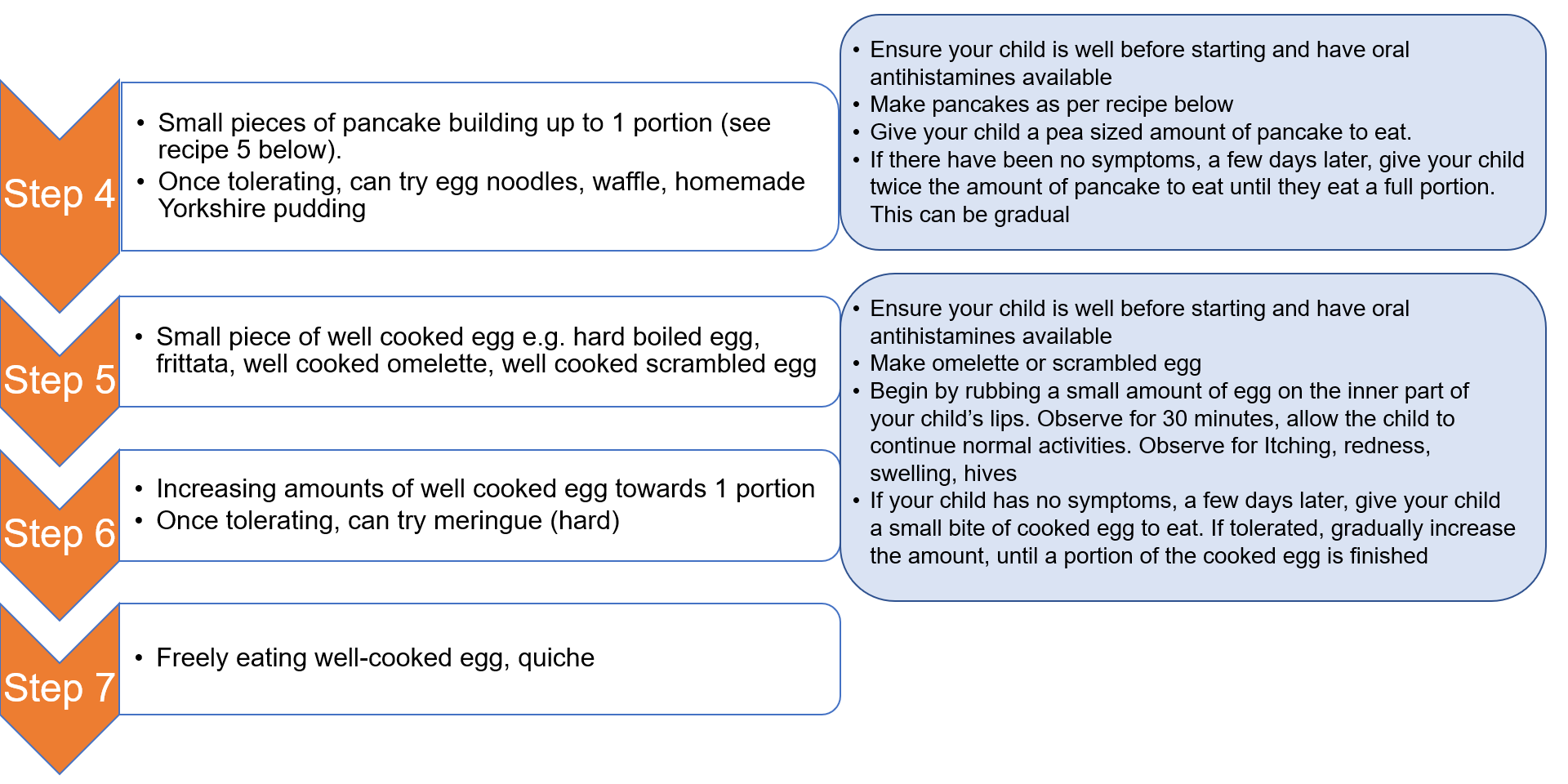
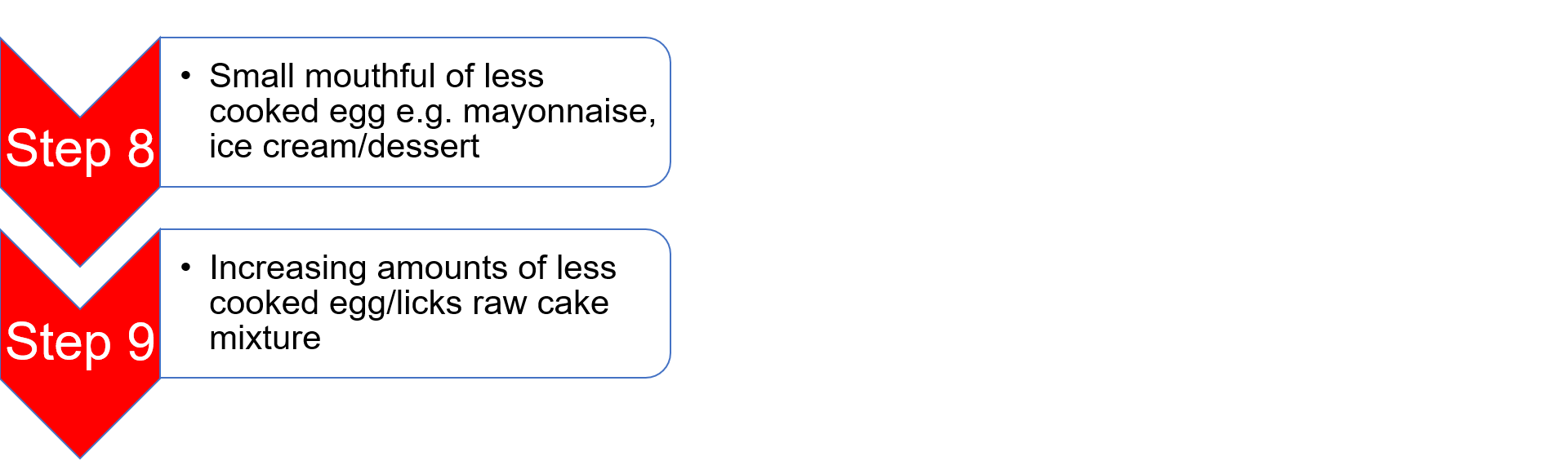
As the allergy resolves, most children will start to tolerate baked egg (such as cakes), followed by lightly cooked egg (such as pancakes, scrambled egg), and then finally raw egg (such as raw cake mix, homemade mayonnaise).
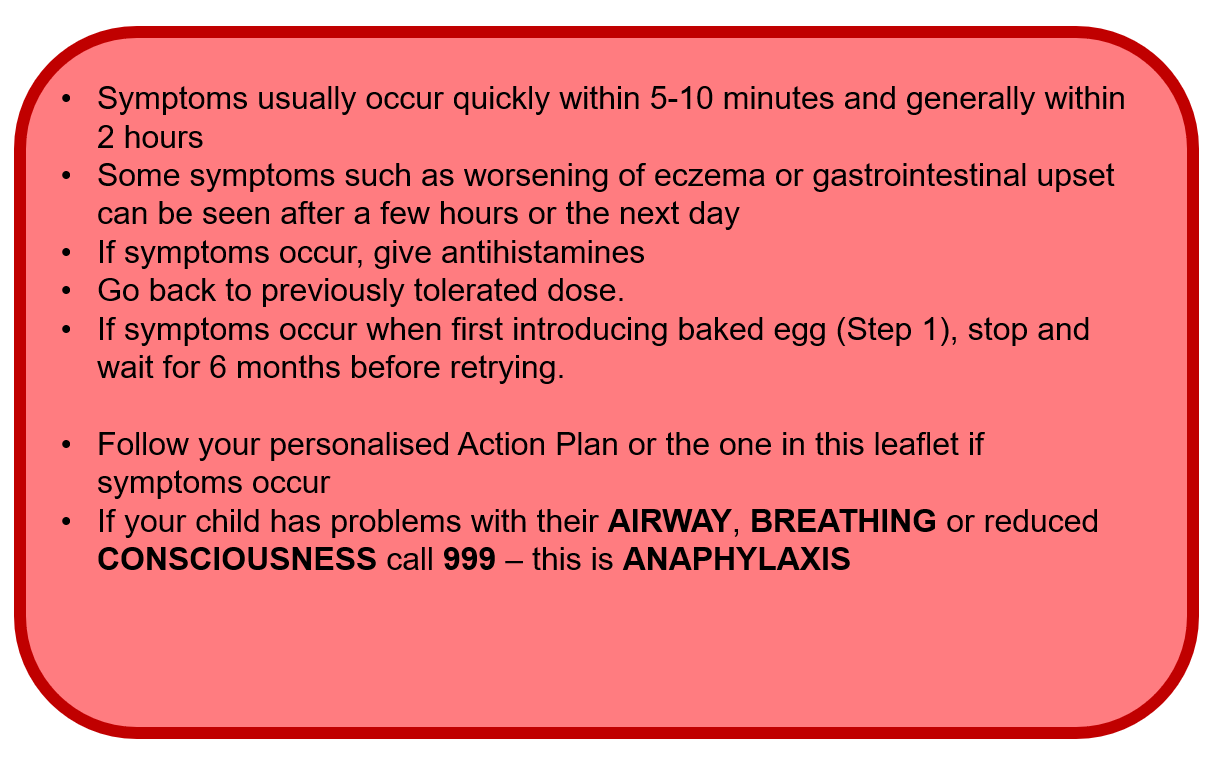
Although most children will outgrow their allergy, there is still a small possibility that your child will react to some food containing egg. To try to keep any reactions as mild as possible please follow these instructions. Ensure you have antihistamines (e.g., cetirizine, chlorphenamine / Piriton®) available when starting.
Egg Ladders for Home Introduction
Children with an egg allergy often tolerate baked egg. Baked egg is egg that is used as an ingredient in food alongside flour that is cooked in the oven. An example of baked egg is cake. Eating baked egg on a regular basis may help your child to grow out of their egg allergy. Introducing baked egg is therefore the first step in egg re-introduction into the diet.
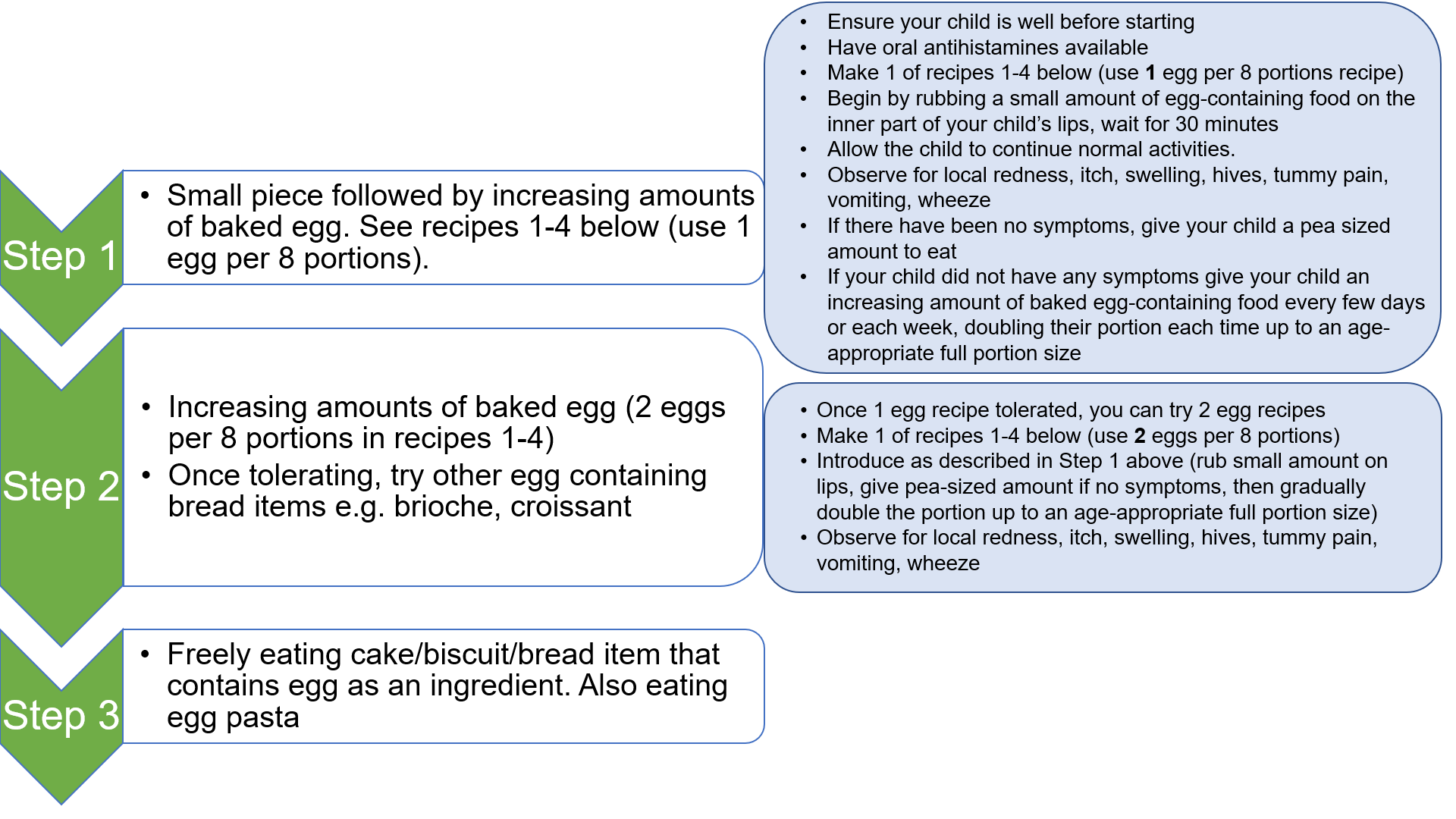
Egg introduction is best done by following an introduction ladder, starting with a small amount of egg protein baked with flour, then larger amounts of well-cooked egg with / without flour in a stepwise process as shown below.
The objective is to give slow, stepwise doses of gradually increasing amounts of egg. This should mean that your child can eventually eat food containing egg, which has been baked or cooked, with no symptoms. The intervals between amounts given can be flexible. It is better to give small amounts frequently to build tolerance before slowly increasing the amount. Don’t worry if your child does not like egg products - this is quite common. Keep offering egg products and try alternatives from the list below.
If your child develops symptoms, continue with a lower amount that was previously tolerated. Stop if symptoms continue.
How to progress the introduction of eggs - Step 1 to 3 (baked egg)
How to progress the introduction of eggs - Step 4 to 9 (well cooked to loosely cooked and finally raw egg)
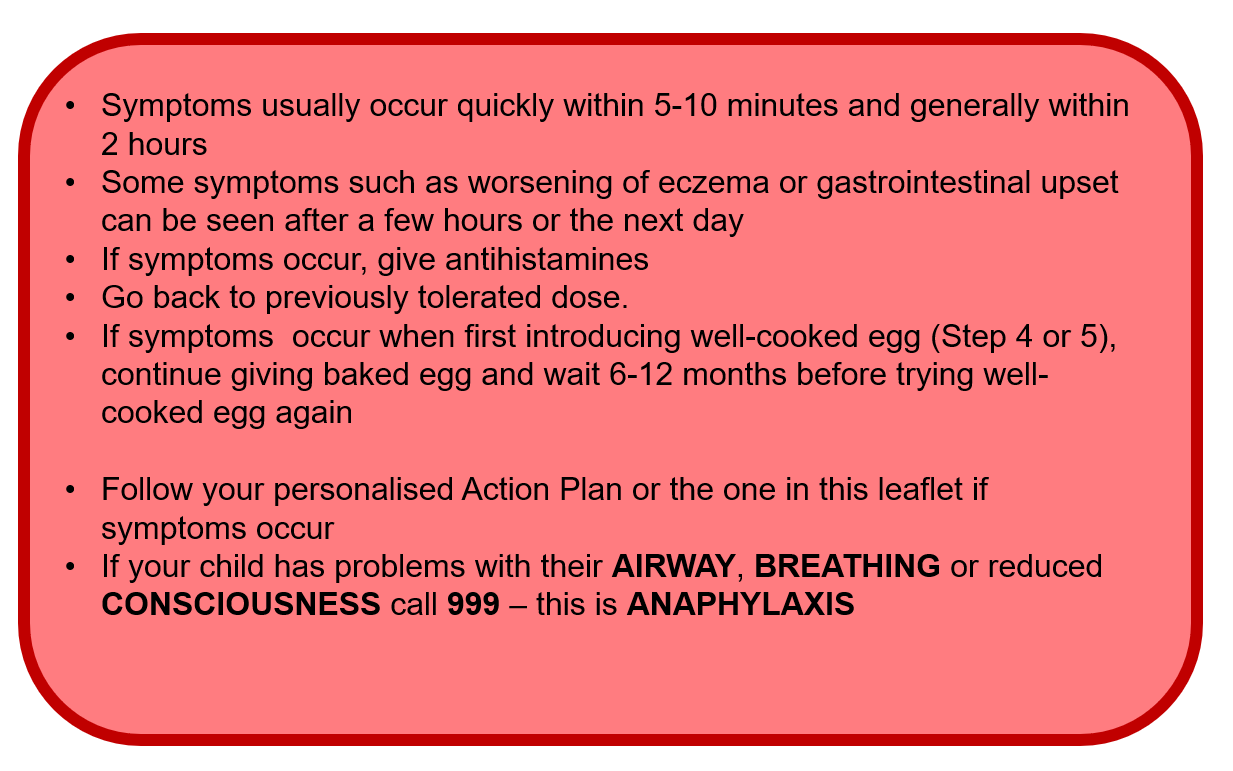
Other egg-containing foods
As your child progresses through the steps above, you might like to introduce a range of egg-containing foods that your child may enjoy and would work well within your family. The table on the next page gives examples of foods you can introduce at the various stages of progression through egg re-introduction.
Egg Classification Table
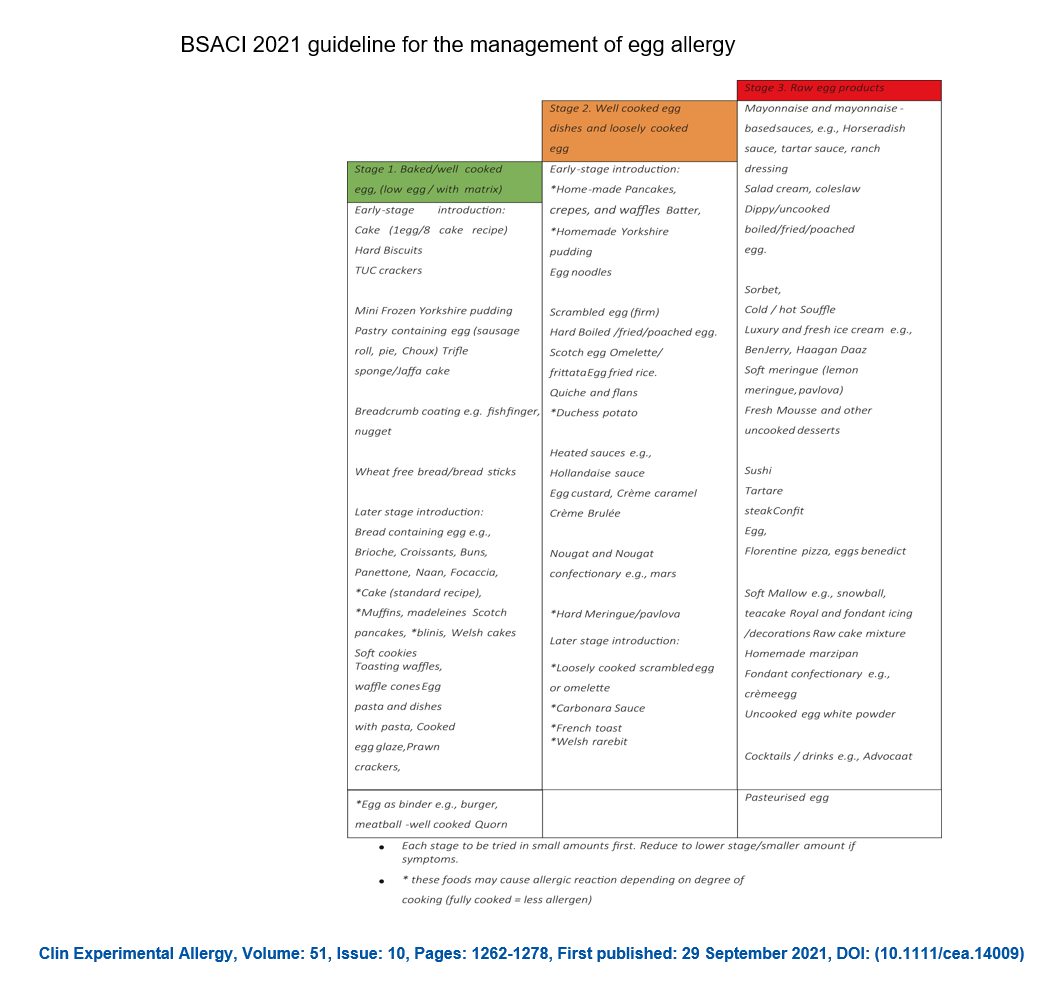
From BSACI 2021
Recipes
Recipe 1 (baked egg) - Mini Apple Cakes - makes 8
| Ingredients | Method |
|
|
Recipe 2 (baked egg) - Sweet or Savoury Pancake Sheet - makes 1 sheet to be cut into 8 portions
| Ingredients | Method |
|
|
Recipe 3 (baked egg) - Banana Cookies - makes 8 toddler size cookies
| Ingredients | Method |
|
|
Recipe 4 (baked egg) - Potato Rosti - makes 8 rosti
| Ingredients | Method |
|
|
Recipe 5 - Pancakes (well cooked egg - amber stage)
| Ingredients | Method |
|
|

More information
- https://ashfordstpeters.net/paediatric-allergy/
- https://www.bsaci.org/
- https://www.anaphylaxis.org.uk/
- https://www.allergyuk.org/


