

Abdominoperineal Excision of Rectum: This is an operation for an ultra-low rectal or anal cancer resection. In this type of surgery, the lower part of your large intestine and the anus are removed, and the area closed permanently. You will then have a permanent stoma.
Leaflet Details
| Title | Abdominoperineal Excision of Rectum |
| Department | Colorectal Surgery |
| Author(s) | Vanessa Machado |
| Review Date | January 2026 |
| Next Review | January 2028 |
| Download | A5 Booklet PDF |
| Accessibility Options | Click on the Recite Me button to show our accessibility resources |
Patient Information
Contents
- BEFORE YOUR SURGERY
- SURGERY
- Risks and Complications
- End Colostomy
- POST-OPERATIVE
- WHEN WILL I GO HOME?
- Useful Contact Numbers
BEFORE YOUR SURGERY
Before we book you for surgery, you will see one of our bowel surgeons at a face-to-face appointment and you will have the surgery and associated risks explained.
Don’t worry if you can’t think about all the questions at that time as you will see one of our Specialist Nurses and you will be able to speak with a doctor again if you need to.
You will have a few more appointments after this one before we can declare you fit for surgery.
You will have a general assessment done by our Pre-Operative Nurses. You will have bloods taken, vital signs (blood pressure, temperature, heart rate, oxygen, height and weight and an ECG) checked and your medical and social history will be formally documented.
At this stage you will be given strong laxatives to clear you bowels (unless if your consultant and/or the team advise otherwise), antibiotics to take on the day before your surgery (to help preventing wound infection), Preload® (carbohydrate drinks) and if you are not diabetic, we will also give you some high energy drinks called Fortisip®.
If you have pre-existing medical conditions which may make you at higher risk for surgery, we may recommend a pre-habilitation program to help reducing this risk.
You may also be advised to see one of our anesthetists pre-operatively and have further tests done.
SURGERY
This is an operation for an ultra-low rectal or anal cancer resection. In this type of surgery, the lower part of your large intestine and the anus are removed, and the area closed permanently. You will then have a permanent stoma.
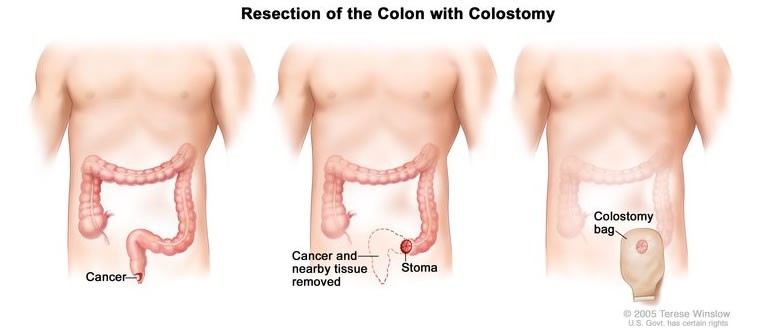
Often, we have to use a mesh to close the perineal defect and sometimes we need to get a plastic surgeon involved when some more specific intra-operative procedures need doing (like flaps).
Risks and Complications Associated with this type of surgery
Bleeding, infection, wound problems, DVT (clot in leg), lung problems (e.g. clot in lung, infection), cardiac problems (e.g. heart attack), stroke, chest infection / complications, kidney problems (e.g. kidney failure), anastomotic leak (in case if this is fashioned elsewhere), recurrence of disease, damage to other organs / structures (e.g. ureter, spleen, bowel, blood vessels), ischaemic bowel, conversion to open procedure (if you are having keyhole surgery), need for blood transfusion, sexual / bladder dysfunction, Incisional hernia, complications associated with stoma, need for further procedures, sepsis, risk of acquiring COVID-19, risk of life (mortality).
Complications with perineum (thin layer of skin between your genitals and anus): infected mesh, perineal hernia, perineal wound breakdown and / or delay healing, flap ischaemia (lack of blood supply), need for further procedures.
End Colostomy
A colostomy is usually sited on the left-hand side of your abdomen. Stools in this type of stoma are expected to be solid.
The end part of your bowel is brought to the surface of your abdomen. This type of stoma is permanent.
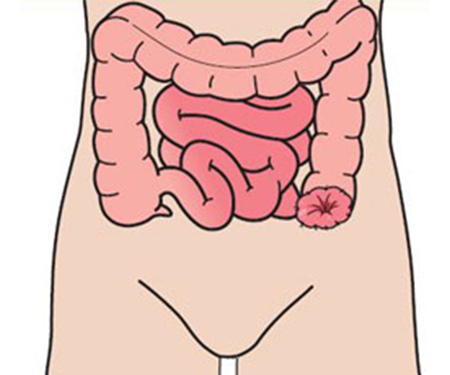
You will see how Stoma Care Nurses before your surgery for the initial teachings and siting of the stoma. You will also see them on the ward and at home after discharge.
Risks and Complications associated with formation of stoma:
Bleeding, infection, high output stoma, parastomal hernia, stoma prolapse, skin excoriation, stoma retraction, stenosis, necrosis / ischaemia (lack of blood supply), kidney problems (e.g. kidney failure), electrolyte imbalances needing infusions, need for further surgery on the stoma due to complications.
Post-operative
After your surgery you will be encouraged to start moving as soon as possible but we advise you not to sit down or lie on your back for the first couple of days to avoid putting too much pressure on the wound on your bottom. You may be provided with a pressure-relieving cushion and mattress while you are in hospital. We will give you more advice according with the progress of your wound.
You will see our team and our Enhanced Recovery Pathway Nurse on the ward. You will also receive the support and training from our Stoma Care Team. They will make sure you or / and your carer are independent with your stoma care before you are discharged.
Every day the team develops a plan / goals for your day and we will work with you to help you recover as quickly and safely as possible.
When will I go home?
You will go home once you are hemodynamically stable (your blood pressure, heart rate, temperature and bloods are within normal values); you are able to mobilize safely; eat and drink adequately; your stoma is active, and you are able to look after it independently.
Contacts
| Advanced Colorectal Nurse Practitioners / Enhanced Recovery Nurses | 07790894612 |
| Robin Ward (St. Peter’s Hospital) | 01932 723941 |
| Colorectal Booking Coordinator | 01932 722267 |
| Falcon Ward | 01932 722287 |
| Kingfisher Ward | 01932 722380 |
| Colorectal Macmillan Cancer Navigator | 01932 726856 |
| Preoperative Assessment Nurses | 01784 882080 01784 884007 |
| Stoma Care Specialist Nurses | 01932 722636 |


