

Bariatric Surgery - Your Guide to our Service: We fully understand at Ashford and St. Peter’s Hospitals that taking the decision to have surgery, to help with weight loss, is a major decision. In appreciation of this, we have designed this guide to inform you of the different types of surgery available, but also what you can expect on your journey.
Leaflet Details
| Title | Bariatric Surgery - Your Guide to our Service |
| Department | Bariatric Surgery |
| Author(s) | Mr. Samer Humadi / Debbie Moyse |
| Review Date | October 2022 |
| Next Review | October 2024 |
| Download | A5 Booklet PDF |
| Accessibility Options | Click on the Recite Me button to show our accessibility resources |
Patient Information
Introduction
We fully understand at Ashford and St. Peter’s Hospitals that taking the decision to have surgery, to help with weight loss, is a major decision. In appreciation of this, we have designed this guide to inform you of the different types of surgery available, but also what you can expect on your journey.
Referral
To qualify for assessment for surgery you are required to have attended and completed a Specialist Weight Management Service. Below are the NICE guidelines with regard to suitability for bariatric surgery.
Guidelines
- BMI of 35kg/m2 or above, with co-morbidities such as diabetes, high blood pressure, heart disease etc.
- BMI of 40 kg/m2 or more with or without any co-morbidities.
- Have first attended and completed a specialist weight management course (Tier 3).
- You must be able and willing to see our specialists.
- You must be fit for surgery and anaesthesia.
- You understand the need for long term follow up and commitment, both before and for 2 years after surgery.
- You have tried and failed with conventional dieting, exercise, and medication to lose and maintain weight.
Why surgery?
It is known conventional weight loss measures often result in a 10% loss of initial body weight. Although this has been scientifically proven to lower cholesterol and death rates, for people with a BMI greater than 35 kg/m2, this still does not reduce your risk factors enough. With all types of surgery, we would expect the extra weight that you carry (your excess weight) to reduce by 50 - 70%, thereby helping medical conditions and improving your quality of life.
Which Surgery?
Determining which surgery is best for you is always going to be difficult and will be dependent upon many things. Useful questions to consider when deciding are:
1. |
How much weight do I want to lose?Realistically the Sleeve Gastrectomy can help you lose 50 - 60% of your excess weight, whilst the Bypass can result in 60 - 70% excess weight loss. However, it is not unknown for Sleeve patients to do just as well. |
2. |
How quickly do I wish to lose weight?For most people with the Bypass or Sleeve gastrectomy, weight loss is immediate and quick for the first 6 - 9 months, then slows and stabilizes between 12-18 months after surgery. |
3. |
How limited is the diet after the operation?Due to the restrictive nature of all surgical options, certain foods may cause difficulties. All should reduce your meal size. With the Bypass, there may be unpleasant side effects if you eat high sugar and fatty foods. |
All these operations involve making long term changes to your eating and lifestyle habits.
Gastric Bypass
Roux-enY Gastric Bypass
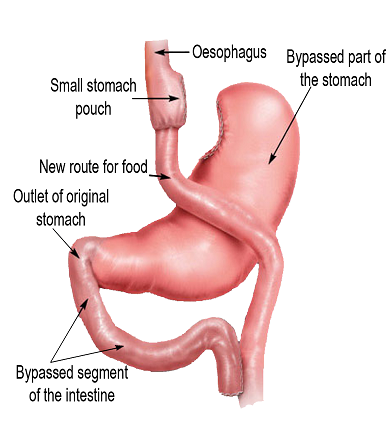
During this surgery, the surgeon creates a pouch similar in size to an egg, therefore restricting the volume that can be eaten.
This pouch is detached from the main part of the stomach. The lower part of the small bowel is then cut, moved up to and attached to the pouch.
The bowel that has been bypassed is then attached to the small bowel, thereby allowing the digestive juices from the pancreas to be mixed with the food coming from the small pouch.
One Anastamosis Gastric Bypass
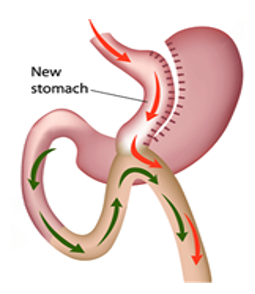
This can also be referred to as the Mini Gastric Bypass (MGB)
A small elongated stomach pouch is created. This pouch is detached from the main part of the stomach. A loop of small bowel is then lifted up and connected to the pouch allowing the digestive juices from the pancreas to be mixed with the food coming from the small pouch.
The bypass works in two ways:
- It restricts the amount that can be eaten and the by-passing of some of the small bowel means that there is a reduction in the amount of calories, protein, vitamins and minerals absorbed.
- To try to prevent vitamin and mineral deficiencies, you will be required to take a daily vitamin and mineral supplement for life.
What are the Benefits and Drawbacks of having a Bypass?
Benefits
- You can expect to lose 60 - 70% of your excess body weight after 2 years.
- Average initial weight loss is quick.
- Evidence suggests that gut hormones can be altered which affects appetite.
- Has a high-resolution rate of diabetes (75%).
Drawbacks
- Has a higher mortality rate (1;250 chance) and more serious complications than other operations.
- It will be necessary to take multivitamin and minerals for life. You may need to take extra supplements based on your dietary intake and blood tests.
- ‘Dumping syndrome’ can occur after eating foods with too much sugar or fat, with symptoms including nausea sweating, faintness, vomiting, and potentially diarrhea.
- It is effectively irreversible. For example, if it were deemed a medical emergency, if could be reversed.
- Medication needs to be reviewed to ensure adequate absorption.
- Increased risk of reflux can occur with OAGB.
- You may not lose or maintain weight loss if you do not stick to healthy eating and lifestyle guidelines.
- It is recommended you avoid alcohol for 1 year after surgery. It may be limited after this, as the side effects of alcohol can occur more rapidly after the bypass, and it contributes to calorie intake and potentially less inhibition with food choices.
PLEASE NOTE:
Lifelong vitamin and mineral supplements are expected with both the Gastric Bypasses and the Sleeve Gastrectomy, and you will need regular bloods tests to monitor your nutritional status.
Sleeve Gastrectomy
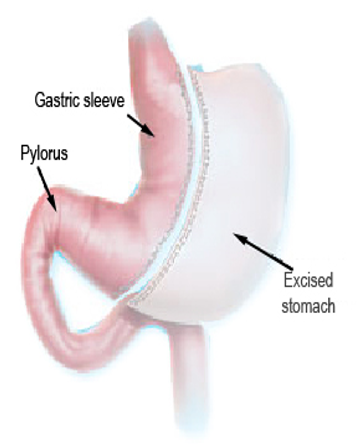
During this surgery, the surgeon removes ¾ of your stomach, leaving a small narrow tube.
It works by reducing your stomach size and therefore restriction the amount of food that can be eaten.
It can also affect the hormones which regulate your appetite, making you feel less hungry.
What are the benefits and drawbacks of having a Sleeve Gastrectomy?
Benefits
- You can expect to lose 50 - 60% of your excess body weight after 2 years.
- It can be converted to a full bypass if needed.
- Evidence suggests that gut hormones can be altered which affects appetite.
- Compared to the bypass, less likely to suffer nutritional deficiencies unless the diet is unbalanced. However, with such a relatively new procedure, please note this may change as new evidence is collected.
Drawbacks
- It is a relatively new procedure as a ‘standalone’ treatment, so longer term data is not yet available.
- It is non-reversible as 75% of the stomach is removed from your body.
- You may not lose or maintain weight loss if you do not stick to healthy eating and lifestyle guidelines.
- Its effects on appetite may only be temporary.
- It is recommended you avoid alcohol for 1 year after surgery. After 1 year, if you decide to start drinking alcohol, please limit.
Patients undergoing a Sleeve Gastrectomy or One Anastamosis Gastric Bypass will require a pre-operative endoscopy to rule out Gastric Reflux disease
Comparison of bariatric surgical procedures
| Sleeve Gastrectomy | Roux-en Y Gastric Bypass | One anastamosis Gastric Bypass | |
| Time of Operation | 1 - 1.5 hours | 2 - 4 hours | 1.5-3 Hours |
| Hospital Stay | 1 - 2 nights | 1 - 2 nights | 1 - 2 nights |
| Wounds | Minimal - Keyhole surgery | Minimal - Keyhole surgery | Minimal - Keyhole surgery |
| Food Intake | Food amount is restricted Food range may be restricted |
Food amount is restricted Food range may be restricted |
Food amount is restricted Food range may be restricted |
| Nutritional Deficiencies | Unlikely but potentially Iron and Vitamin B12 | Potentially Iron, fat soluble vitamins, Calcium, Vitamin B12 | Potentially Iron, fat soluble vitamins, Calcium, Vitamin B12 |
| Potential Side Effects & Complications | Vomiting, Nausea Bleeding, infection, clot formation, staple-line leak, Reflux |
Vomiting, Bleeding, infection, clot formation, Anastomotic leak, Dumping Syndrome Possible change in bowel habits |
Vomiting, Bleeding, infection, clot formation, Anastomotic leak, Dumping Syndrome Possible change in bowel habits |
| Expected weight Loss after 12-18 months | 50 - 60% of excess weight | 60 - 70% of excess weight | 60 - 70% of excess weight |
| Reversibility | Permanent | Essentially irreversible | Reversible |
| Death Rate (within 30 days of surgery) | 2-4 in 1000 | 2-4 in 1000 | 2-4 in 1000 |
| Follow Up | Long term 2 years with surgery provider Discharged to GP at 2 years for annual review + blood tests |
Long term 2 years with surgery provider Discharged to GP at 2 years for annual review + blood tests |
Long term 2 years with surgery provider Discharged to GP at 2 years for annual review + blood tests |
Other things to take into consideration
The Pre-operative Diet (Liver Shrinkage diet)
- You will be expected to follow a liver shrinkage diet for 2 - 4 weeks before any bariatric operation to prepare your body for surgery.
- When you are overweight, your liver can become enlarged through excess fat and glycogen (sugar) deposits. This enlarged liver can make surgery difficult.
- This diet encourages your liver to use up the excess glycogen and fat stores, thereby making surgery easier by shrinking the size and weight of your liver.
- It is essential that you follow this diet to reduce the risk of damage to the liver. If you do not strictly adhere to it, the surgeon can tell and they may decide it is too risky for the operation to go ahead.
- You will be expected to take a Multivitamin supplements (A-Z complete) on this diet.
The Post-operative Diet
- You will follow a special diet for approximately 3 weeks after any bariatric surgery.
- This allows your body to recover and heal after the operation, and for you to become used to the restrictions.
- After 3 weeks you should be on normal food consistency. This will be discussed at your initial surgery group session and a detailed booklet provided.
Time off Work
It is best to discuss this with the bariatric surgeon or the clinical nurse, but generally it is expected for patients to have 4-6 weeks off depending upon your occupation.
Mental Health and Well-being
Bariatric surgery aims to reduce patients’ weight, therefore improving their general well-being and health, and extending their life expectancy. Many people notice a change in their mood after surgery, with some reporting improvements post operatively. However, surgery does not necessarily improve any existing psychological, career or relationship difficulties or other mental health issues.
Often, food can provide a source of comfort and a means of self-soothing or regulating unpleasant or difficult emotions. If you notice that you eat in response to certain emotions, you will need to learn additional ways of managing this.
If you have a history of eating disorders such as bulimia, binge eating or overeat regularly in response to difficult situations or feelings, please speak to a health care professional about this prior to any bariatric operation. The Bariatric Psychology team can help you discuss these difficulties and explore alternative ways of responding to difficult situations and emotions.
If you are receiving care from a community mental health service, please inform them that you are to have surgery so they can provide you with any extra help you need after surgery.
Smoking
We currently have a smoke free policy meaning all patients undergoing surgery need to have stopped smoking for 6 months before being placed on the waiting list. Smoking affects wound healing adversely and can increase the risk of stomach ulcers in the long term after bariatric surgery.
Alcohol
All patients are expected to comply with national alcohol consumption guidelines. These state that men and women should have a maximum alcohol intake of 14 units per week. Surgery will be delayed until patients are within these guidelines. After surgery, patients are recommended to avoid alcohol for 12 months.
Pregnancy
Losing weight can increase fertility. However, we recommend that you do not become pregnant for 18 months after the gastric bypass or sleeve gastrectomy. The associated rapid weight loss with both, places the body under great stress, depletes its stores and restricts what you can eat. This can put the baby’s development at risk.
Excess Skin
Significant weight loss in people who have been overweight for many years, can result in skin becoming loose, as the skin and underlying tissues cannot return to their previous state. This is particularly true of skin on the stomach, arms and legs. Although there are several surgical procedures to remove excess skin, these are not routinely funded through the NHS.
Your Care Plan - What does it entail?
You should have already received a questionnaire. This form is important and needs to be completed. Everyone should also have also received a nutritional and psychology questionnaire with this.
Initial Appointment - Bariatric Workshop
This is a virtual group meeting with our Specialist Nurse and dietitian. Please allow 3-4 hours. The nurse will describe the surgical options available and go through the risks associated with each procedure in depth. The dietitian will go through the dietary changes expected with surgery. You will be able to ask questions and see others in a similar situation to you. Afterwards, a blood form will be posted to you. Once you have attended this meeting and have had your blood test and we have the results, you will be sent a date in the post for our one stop clinic.
One Stop clinic
You will see 4 different specialists during this virtual one Stop clinic. Please allow 3 ½ hours. During this virtual clinic, you will have the following assessments.
- Surgical Assessment
Our surgeon will describe the surgical side of the operation and risks in more depth and assess whether you are suitable for surgery.
- Nurse Specialist
The nurse will discuss what your preference is for surgery and discuss some of the areas mentioned in the initial appointment specifically tailored to you.
- Dietetic Assessment
The dietitian will assess and discuss your current diet and the dietary implications of surgery for you in depth. This will mean changing your lifestyle habits and you will be encouraged to lose some weight prior to surgery.
- Anaesthetist Assessments
The anaesthetist will go through your medical risks and assess your requirements for a safe surgery.
- Psychology Screening
You won’t see the psychologist at this clinic. They will review the psychology forms that you have competed and determine if you need a separate appointment with them. If you do, the aim, will be to learn more about your eating behaviour, psychological wellbeing and support system. The psychologist will also discuss resources and options for further support as required.
MDT Meeting
Once you have attended this one stop clinic, your case will be discussed during a team meeting immediately afterwards and the most appropriate way forward will be decided.
Further Assessments
Some people may need to see other specialists prior to surgery to assess whether there are medical issues that could impact on their surgery. If this is the case, you will be referred to those specialties and we will await the outcome from them before making a final decision on surgery.
Pre-Op Assessment
Once you have been placed on our waiting list, you will have to attend this appointment. It is an assessment to check you are fit and well for surgery. During this appointment you will be asked questions, have some swabs and bloods taken all in preparation for surgery.
Follow up After Surgery
Follow up after bariatric surgery is essential for monitoring of potential complications. We expect you to be available for regular follow up appointments. The Surgeon and Dietitian will review you at approximately 8 weeks after surgery. You will then be given regular dietetic follow up appointments for 18 months and a further nurse appointment at 2 years. At which point your care will be transferred back to your G.P for an annual review.
What happens in the event of an emergency with bariatric surgery?
In the event of an emergency, please contact the Bariatric Clinical Nurse Specialist on 01932 722077 during working hours or attend A+E at St Peters Hospital where one of the Bariatric team can assess you.
What happens if I decide not to have surgery?
If you decide surgery is not for you, due to any reason, please tell us at any stage and we can pause your pathway or you can be discharged if you want. We can endeavour to see if there is an alternative.
Is there a support group?
Due to the Covid Pandemic we are unable to offer a support group as we used to. If you would like to access support we recommend that you access the Zoom based support group run by Obesity UK on:.
- Sunday 19.30-21.00 Bariatric Surgery Group
- Wednesday 19.30-21.00 General Support.
You can access the support groups by visiting the Obesity UK Support Group
https://www.obesityuk.org.uk/support-groups
You can follow Obesity UK on Facebook to access the support group. Please do this if you want to contact the support group organisers. You can access directly via Zoom and use meeting ID below:
Meeting ID: 625 809 4672 No password required.
Remember, the surgery is a tool and learning how to work with it to obtain the best results for you is important and patient support groups can often be an invaluable resource for learning from other patients and your success will, in turn, inspire other people considering surgery.
General advice to our patients undergoing weight loss surgery:
- We advise patients to attend all their pre-surgery appointments to avoid delay in their assessment process.
- We do not offer surgery to any one actively smoking (need to have stopped smoking at least 6 months prior to the offer of surgery)
- Continue to be abstinent from smoking after surgery otherwise there is an increased risk of ulcers, stricture and malabsorption
- Alcohol consumption prior to surgery should be within 14 units per week, as per national guidelines.
- Avoid drinking alcohol for a year after surgery.
- Patients are encouraged to follow Healthy eating and Vitamin & mineral supplement guidelines to avoid serious complications due to lack of vitamins and minerals or protein in the body.
- Patients are recommended to attend post-surgery follow up appointments for 2 years to monitor for any serious complications and to aid your personal goals.
- For female patients, we advise conversion of oral contraceptives to non-oral form following discussion with your general practitioners.
We strongly advise to avoid pregnancy for 18 months after surgery as it may have very serious effects on the mother and foetus (death).
- We encourage our patients to contact the bariatric office should there be any concern with your health after surgery.
We strongly advise you to disclose relevant information regarding your medical, social, psychological, physical and other conditions which will help us to provide you with the best care possible. Failing to disclose any information may have deleterious effects on the outcome of your surgery.
Contact Details
For appointments, general enquires or to track your progress contact the Bariatric admin team on: 01784 884621
- Specialist Nurses 01932 722077
- Dietitians 01932 722697
Additional Information
There are many websites and books on weight loss surgery. You may find some of the information contradictory; if you are ever in doubt please contact our team to discuss this.
Below are some sources of information you may find helpful.
- Living with Bariatric Surgery: Managing your mind and your weight
- https://bomss.org/ - The British Obesity and Metabolic Surgery Society
- The Weight Loss Surgery Workbook: Deciding on Bariatric Surgery, Preparing for the Procedure, and Changing Habits for Post-Surgery Success. Develop Your Personal Plan for Weight Loss Surgery Success. 2011. Doreen Samelson. New Harbinger Publications.
- The Diet Trap: feed your psychological needs and end the struggle with weight loss using Acceptance and Commitment Therapy. 2014. Jason Lillis, JoAnne Dahl and Sandra Weinland. New Harbinger Publications.
- Weight Escape Workshop Book. Stop fad dieting, start losing weight and reshape your life using cutting edge psychology. 2014. Joseph Ciarrocci, Ann Bailey and Russ Harris. Penguin books. https://theweightescape.com/
- Susan Albers. Eat, drink and be mindful. https://eatingmindfully.com/
- Mindful eating, mindful life. Thich Nhat Hanh & Dr Lilian Cheung Savor.
- Mindfulness for Health. A practical guide to relieving pain, reducing stress and restoring wellbeing. Piatkus. Vidyamala Burch and Danny Penman.


