

Leaflet Details
| Title | Burning Mouth Syndrome (BMS) |
| Department | Oral and Maxillofacial Surgery |
| Author(s) | Youssef Akoush |
| Review Date | March 2026 |
| Next Review | March 2028 |
| Download | A4 Handout PDF |
| Accessibility Options | Click on the Recite Me button to show our accessibility resources |
Patient Information
What is Burning Mouth Syndrome (BMS)?
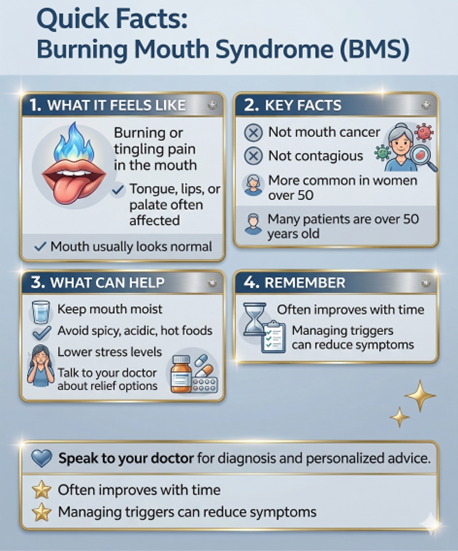
BMS causes a persistent burning, scalding or tingling pain in the mouth. The mouth usually looks normal on examination, which can be confusing, but your symptoms are real and we take them seriously. BMS is not mouth cancer and it is not contagious. Many people improve with time and treatment. BMS is more common in women than men. In fact, most patients are women around or after the menopause (often over 50 years old). On average the condition can last for months or years, and symptoms may ease or disappear over time in some people.
What causes BMS?
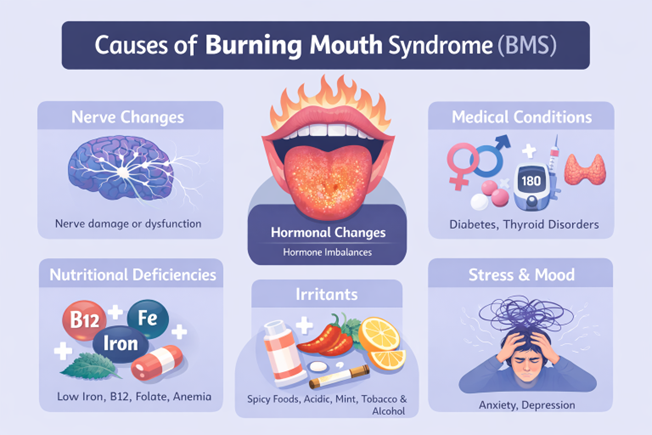
The exact cause of BMS is often unclear and likely involves several factors. Experts consider BMS to be a neuropathic pain condition, meaning it involves changes in nerve signalling. Possible contributing factors include:
How is BMS diagnosed?
BMS is a diagnosis of exclusion. We will:
- Examine your mouth and take a full history.
- Offer swabs to rule out infection (e.g., thrush) and blood tests to check for vitamin or metabolic causes.
- Only after other causes are excluded will we consider the diagnosis of BMS and discuss treatment options or referral.
Managing and living with BMS
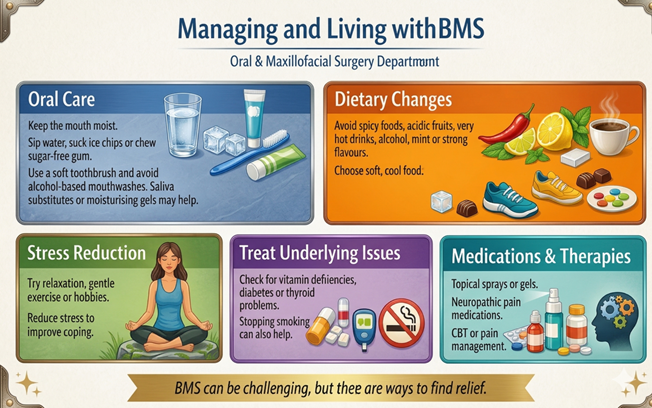
Living with BMS can be challenging, but there are ways to reduce discomfort and help you cope. Although BMS cannot be “cured”, treatments aim to reduce the pain and help you manage symptoms. You and your care team can consider the following strategies:
Help
If you have any sudden changes (for example new oral sores or bleeding), contact a healthcare professional promptly. Otherwise, continue with the self-care tips above and keep in regular contact with your specialist as planned.
For further information, please visit the following link:
https://bisom.org.uk/wp-content/uploads/2020/08/BMS-PIL.pdf
This leaflet provides general information only. It does not replace a discussion with your surgeon. You will have the opportunity to ask questions and discuss alternatives before giving consent.


