

Leaflet Details
| Title | Geographic Tongue |
| Department | Oral and Maxillofacial Surgery |
| Author(s) | Youssef Akoush |
| Review Date | March 2026 |
| Next Review | March 2028 |
| Download | A4 Handout PDF |
| Accessibility Options | Click on the Recite Me button to show our accessibility resources |
Patient Information
What is geographic tongue?
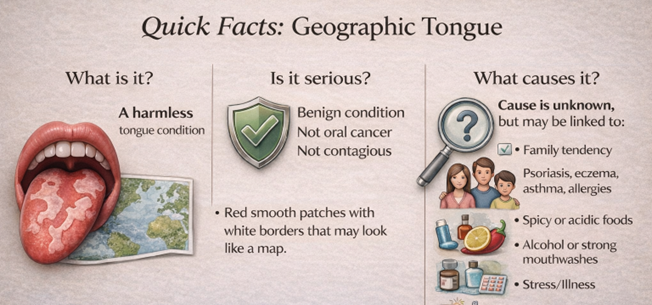
Geographic tongue (also called benign migratory glossitis or erythema migrans) is a harmless condition that affects the surface of the tongue. It causes red, smooth patches with pale or white borders that often look like a map. The patches can change size and position over days or weeks.
Is it serious?
No. Geographic tongue is a benign condition and is not linked with oral cancer. Most people have no symptoms. When symptoms occur, they are usually mild and manageable.
What causes it?
The exact cause is unknown. It is not an infection and cannot be passed to others. Factors that are sometimes associated with geographic tongue include:
- Family tendency (it can run in families)
- Associations with psoriasis, eczema, asthma and some allergies
- Irritation from spicy/acidic foods, alcohol, or strong mouthwashes
- Some people notice flare-ups with stress or after illness
Who gets it?
Geographic tongue can affect people of any age. It is relatively common and more often noticed in adults than very young children.
What does it look and feel like?
- Smooth, red patches on the top and sides of the tongue, often surrounded by a pale or white border
- Patches move or change shape over time (migratory)
- Often there is no pain; some people notice sensitivity, burning or soreness, particularly with spicy, acidic or salty foods
How is it diagnosed?
Your dentist, GP or oral specialist will usually diagnose geographic tongue from the appearance of the tongue and your history. No tests are usually necessary. If the patches are not present during your appointment, a photo taken when the patches are visible can be helpful.
Occasionally your clinician may offer tests to rule out other causes such as fungal infection (thrush) or nutritional deficiencies if clinically indicated.
Treatments and self-care
There is no cure, but treatment is only needed if your tongue is uncomfortable. Options include:
- Avoid foods that irritate you (spicy, very hot, citrus, vinegary or salty foods)
- Avoid strong alcohol-containing mouthwashes and choose a mild, alcohol-free mouthwash
- Swap to an SLS-free toothpaste if you find toothpaste stings
- Reduce smoking and limit alcohol to recommended limits
- Good oral hygiene and regular dental checks to reduce irritation from sharp teeth or broken fillings
When should I seek further advice?
- The patches are painful and not improving with simple measures
- You develop a single persistent ulcer, lump or area that does not heal after 2-3 weeks
- You are worried about changes in the mouth or general health
- You develop other skin conditions such as psoriasis or a rash that concerns you
What can I expect long term?
Geographic tongue often comes and goes. Many people notice flare-ups and quiet periods. For most, it remains a harmless and manageable condition.
For further information, please visit the following link:
https://bisom.org.uk/wp-content/uploads/2020/02/Geographic-Tongue-PIL-April-2019.pdf
This leaflet provides general information only. It does not replace a discussion with your surgeon. You will have the opportunity to ask questions and discuss alternatives before giving consent.


