

Leaflet Details
| Title | Oral Cryotherapy |
| Department | Oral and Maxillofacial Surgery |
| Author(s) | Youssef Akoush |
| Review Date | March 2026 |
| Next Review | March 2028 |
| Download | A4 Handout PDF |
| Accessibility Options | Click on the Recite Me button to show our accessibility resources |
Patient Information
What is cryotherapy?
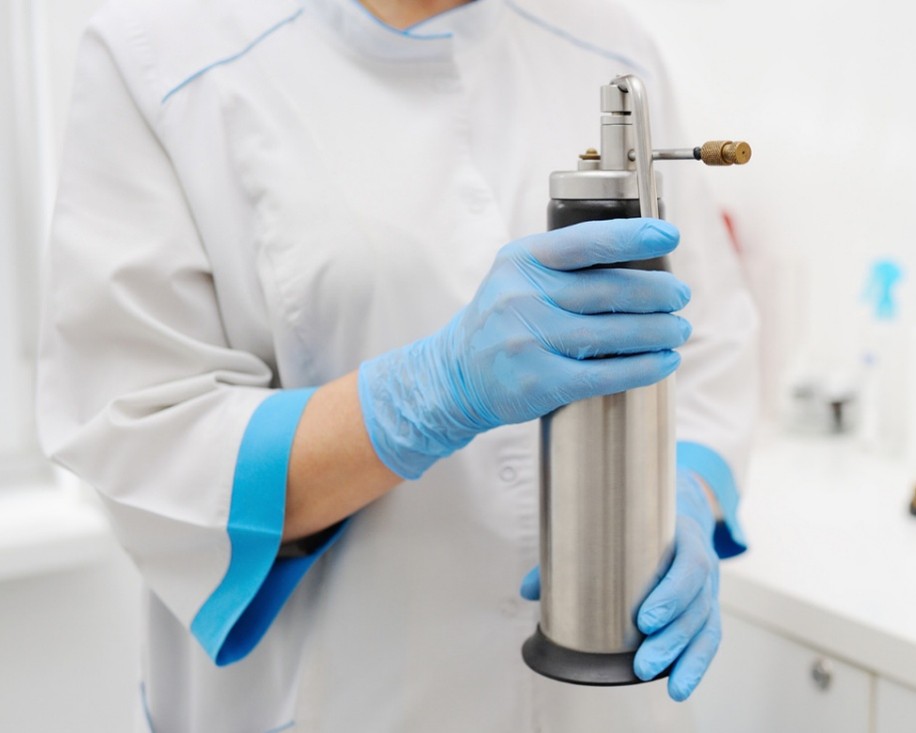
Cryotherapy (also called cryosurgery) uses very low temperatures to treat small lumps or abnormal tissue. In the mouth we commonly use liquid nitrogen applied with a probe to freeze and reduce certain types of lesions, for example small blood vessel collections (vascular malformations) or mucus cysts.
Why might I need it?
- To shrink or remove a small lesion that is causing symptoms (bleeding, discomfort, interference with chewing or speaking).
- It may be offered when the lesion is suitable for freezing instead of a surgical excision.
Alternatives
- Leaving the lesion alone if it causes no problems.
- Surgical removal under local or general anaesthetic.
- Other treatments such as sclerotherapy or laser (for some vascular lesions).
During the procedure
- The clinician will sit you comfortably in the clinic chair.
- A local anaesthetic may be used to numb the area.
- A cooled metal probe or a handheld spray of liquid nitrogen is applied to the lesion for around 30-60 seconds, and this may be repeated 2-3 times. You will feel a strong cold sensation and some discomfort, but the procedure is usually quick.
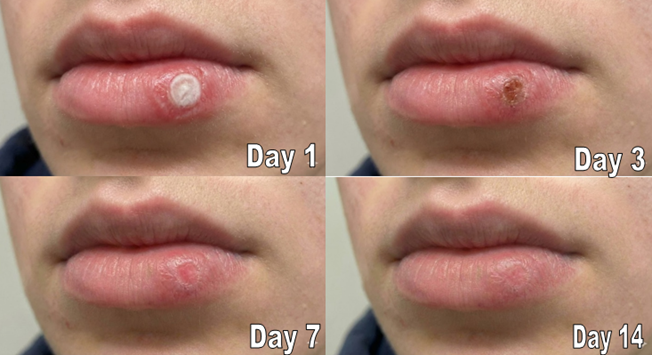
- The treated area will blanch (turn white) during freezing and then thaw back over a few minutes.
After the procedure - what to expect
- The area can be uncomfortable - simple painkillers such as paracetamol or ibuprofen are usually enough.
- Stick to a soft diet for 24-72 hours if the mouth was treated. Avoid hot, spicy, or acidic foods until healing is complete.
Possible risks and complications
Most people have no serious problems.
Rarely:
- Prolonged pain, infection or delayed healing.
- Persistent numbness if nearby nerves are affected (uncommon).
- Scarring of the treated area.
- Small chance the lesion may not completely disappear, and further treatment could be needed.
Returning to work and normal activities
- Many people can return to normal activities the same or next day. If the face or mouth looks visibly swollen, you may prefer a day or two off.
- Avoid vigorous exercise for 24–48 hours if you feel uncomfortable.
Follow up
- You will usually be given a follow-up appointment to check healing and treatment effect. Sometimes additional cryotherapy sessions or alternative treatment may be arranged.
When to seek help
Contact the Oral & Maxillofacial Surgery department or your GP if you have:
- Increasing pain not relieved by simple painkillers.
- Heavy or uncontrolled bleeding from the treated area.
- Signs of infection (fever, increasing redness, spreading swelling, pus).
- Any new worrying changes to the area.
FAQs (short answers)
Will it hurt?
Some discomfort is normal during freezing but local anaesthetic reduces pain. After the procedure, mild to moderate soreness is common.
How many treatments will I need?
Often one session is enough, but some lesions need repeat treatments.
Will it affect my speech or eating long-term?
Long-term effects are rare. Most people have no lasting changes.
This leaflet provides general information only. It does not replace a discussion with your surgeon.
You will have the opportunity to ask questions and discuss alternatives before giving consent.


