

Leaflet Details
| Title | Recurrent Aphthous Stomatitis (Recurrent Mouth Ulcers) |
| Department | Oral and Maxillofacial Surgery |
| Author(s) | Youssef Akoush |
| Review Date | March 2026 |
| Next Review | March 2028 |
| Download | A4 Handout PDF |
| Accessibility Options | Click on the Recite Me button to show our accessibility resources |
Patient Information
What are they?
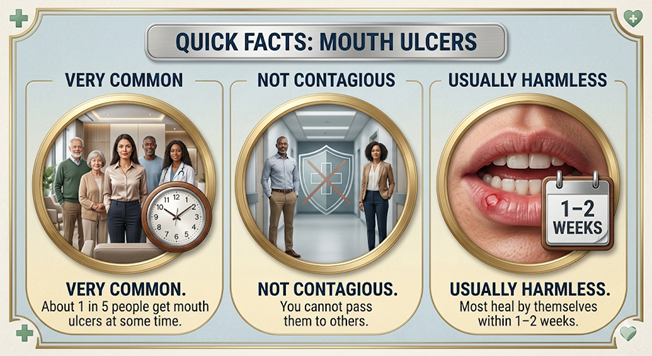
Mouth ulcers are small, shallow sores inside the mouth. They often start as a painful red spot and become a shallow white or yellow ulcer with a red edge.
Where they usually appear:
- Inside the cheeks or lips
- On the tongue
- Under the tongue or floor of the mouth
Common types (simple guide)
- Minor: small, heal in 1-2 weeks, no scar.
- Major: larger, heal slowly (weeks), may scar.
- Herpetiform: many tiny ulcers that can join together
Causes and Triggers
The exact cause of recurrent mouth ulcers (recurrent aphthous stomatitis) is unknown. It involves the immune system reacting in the mouth. Common triggers include:
- Mouth injury or trauma: Biting the cheek or tongue, or rubbing by sharp teeth, braces, dentures or a toothbrush. Dental work or dentures sometimes cause “traumatic” ulcers.
- Stress or tiredness: Many people notice ulcers during times of stress or fatigue.
- Hormonal changes: Some women get ulcers around their period. Pregnancy can also change ulcer patterns.
- Food and drink: Very hot, spicy, salty or acidic foods and drinks can trigger or worsen ulcers.
- Dietary deficiencies: Low levels of iron, folate (folic acid) or B vitamins can contribute. A balanced diet helps.
- Stopping smoking: Ironically, quitting smoking can trigger ulcers in some people, for unclear reasons.
Some rarer causes include certain medications (like NSAIDs, beta-blockers or nicorandil) or underlying health conditions (e.g. Crohn’s disease, coeliac disease, or Behçet’s disease). It’s important to tell your doctor if you have ulcers along with other symptoms (such as skin or genital ulcers, digestive symptoms, or swollen joints).
What do they look like?
Aphthous ulcers typically have a yellow-grey base surrounded by a red halo. They are usually painful, especially when irritated by hot, spicy or acidic foods, and can make eating or speaking uncomfortable. Most people only have one or a few ulcers at a time. Each ulcer usually starts as a small red bump and then breaks down. They almost always heal on their own within a week or two but tend to recur over time (hence “recurrent” ulcers).
How to manage them at home?
Most mouth ulcers need no formal “cure” and will settle with time. Treatment focuses on relieving pain, keeping the area clean, and helping ulcers heal. Options include:
- Topical treatments: Prescribed Topical corticosteroids are the main treatment. These are available as mouthwashes, sprays, and small dissolvable pellets.
- Over-the-counter mouth gels / ointments (e.g. those containing hydrocortisone or choline salicylate like Anbesol / Bonjela) can soothe pain. Apply these with clean finger or cotton bud to the sore.
- Pain relief: Sucking or swishing an anaesthetic gel or rinse (benzocaine) can numb the ulcer temporarily. Paracetamol or ibuprofen tablets can also help if eating and drinking are very painful.
- Mouthwashes: An alcohol-free antiseptic mouthwash (e.g. chlorhexidine / Corsodyl) or salt (saline) rinse can reduce bacteria and keep the mouth clean. If brushing is too painful, rinse after meals to clean teeth. Tetracycline mouthwash (only by prescription) is sometimes used because it can both numb and reduce infection.
- Covering agents: Special pastes or dissolving films (like Orabase or Zilactin) form a protective barrier over the ulcer, reducing friction and pain.
- Hydration and nutrition: Drink cool fluids through a straw and eat soft, bland foods (e.g. yoghurt, smoothies, soups) to avoid irritating the ulcer. Avoid very spicy, rough, salty or acidic foods and toothpaste with sodium lauryl sulphate, as these can worsen ulcers. A healthy diet rich in fruits and vegetables (vitamins A, C, E and B-group) supports mouth health.
Dental check-ups can prevent ulcers caused by sharp teeth or poor fillings. Your dentist can smooth sharp edges or adjust poorly fitting dentures or braces to stop repeated trauma in the mouth. Also maintain good oral hygiene (brushing gently with a soft toothbrush and flossing) to keep your mouth healthy.
When to See a Doctor or Dentist
Most ulcers improve at home, but seek help if:
- An ulcer lasts longer than 3 weeks.
- Ulcers are unusually large, persistent, or spreading.
- New symptoms appear (e.g. ulcers on skin/genitals, joint pain, blood in stools), suggesting a systemic issue.
- The pain is so bad that you can’t eat, drink or sleep.
Your dentist or doctor will check if it’s really a benign ulcer and not a different condition. They may order blood tests (to check for anaemia or vitamin deficiencies) or refer you to a specialist (Oral Medicine) for recurring, severe cases. A biopsy may be needed to confirm diagnosis and exclude malignancy. Remember, mouth ulcers are not cancer in almost all cases, but persistent sores should always be checked as a precaution.
For further information, please visit the following link:
https://bisom.org.uk/wp-content/uploads/2020/02/RAS-PIL-October-2019.pdf
This leaflet provides general information only. It does not replace a discussion with your surgeon. You will have the opportunity to ask questions and discuss alternatives before giving consent.


