

Leaflet Details
| Title | Vulval Skincare |
| Department | Gynaecology |
| Author(s) | Dr Basit Khan, Miss D. Warren |
| Review Date | January 2026 |
| Next Review | January 2028 |
| Download | A5 Booklet PDF |
| Accessibility Options | Click on the Recite Me button to show our accessibility resources |
Patient Information
What are the aims of this leaflet?
The purpose of this leaflet is to provide you with information regarding vulval skin care. It provides general advice on good vulval skincare for all girls and women.
Although good vulval care can help relieve symptoms like itching, dryness, or soreness in the genital area without a specific diagnosis, it does not address specific skin conditions that affect the vulva. Specific skin conditions will be discussed in other leaflets and by your doctor at your appointment.
What is Vulval Skin?
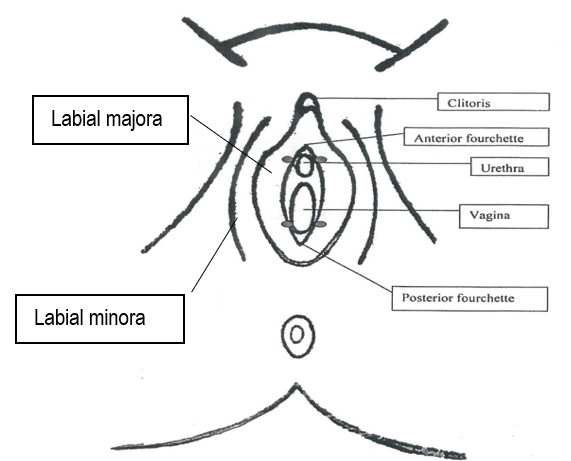
The “vulva” is the term used to describe the visible part of the female genitalia, around the vagina area, which includes the inner and outer “lips” (labia) and clitoris.
HOW SHOULD I CARE FOR MY VULVAL SKIN?
- The vulva's skin is sensitive and can be easily irritated by daily goods such as panty liners, soap, bubble baths, shower gels, talcum powder, cleansing wipes and feminine hygiene wipes, perfumes, deodorants, antiseptics, fragranced washing powders, and fabric conditioners.
- Avoid using any of the irritant products listed above on the vulva.
- Washing the vulva too frequently might worsen dryness and cause irritation. Do not wash the vulva too often (once a day is usually enough).
- Apply an unscented emollient (moisturizing) ointment, cream or lotion regularly to soothe, protect and act as a barrier.
- If shampoos and shower gels irritate the vulva during showering, apply your emollient before taking a bath or shower in order to prevent the skin from coming into contact with these products.
- Wearing loose-fitting, 100% cotton underwear and staying away from tight-fitting items like leggings, jeans, and tights may be more comfortable for you.
- Sleep without underwear.
HOW SHOULD I WASH MY VULVA?
Wash your vulva gently, using your hands. Avoid using a flannel or cloth as this can scratch the skin. Pat the area dry with a soft towel. It is preferable to always use an emollient cream or ointment as a substitute for soap. Do not use cleansing wet wipes as these may irritate vulval skin.
HOW SHOULD I APPLY AN EMOLLIENT?
If the vulval skin is dry, itchy, or sore, an emollient will help to moisturize and soothe. Emollients come in a broad variety of forms, ranging from oil - based ointments to creams. It really depends on your personal preference, but generally, ointments are superior to lotions and creams for vulval skin because they provide greater protection against moisture loss. Steer clear of products with lengthy ingredient lists and perfumes.
All emollients are available over the counter, or your GP can prescribe them. If you're using an ointment preparation, use a clean wooden spatula or spoon to remove it from the pot instead of your fingers. Apply the emollient directly to the vulval skin with your fingers and gently rub it in. Make sure your fingernails are not rough or chipped, as they may scratch the delicate vulval skin. Emollients should be applied as often as needed, with no restrictions on when or how much to use. They can also be used as a barrier before passing urine or opening the bowels.
WHEN SHOULD I APPLY OTHER TREATMENTS?
Do not apply emollients concurrently with other treatments, such as steroid creams or other treatments prescribed by your doctor. This may reduce their effectiveness and increase the risk of spreading the treatment to other areas. Allow at least 15-30 minutes between moisturizing and applying other treatments.
WHAT ARE THE POSSIBLE SIDE EFFECTS OF EMOLLIENTS?
Emollients are unlikely to pose side effects unless you have an allergy to one of the ingredients. They can occasionally irritate or sting sensitive skin. In this case, seek advice from your doctor and/or consider a different product. It's important to remember that oil-based emollients can damage or degrade latex condoms and diaphragms, causing breaks and splits. A cream-based emollient may be preferred. Using an emollient does not require you to abstain from sexual intercourse.
CAUTION:This leaflet mentions ‘emollients’ (moisturisers). Emollients, creams, lotions, and ointments contain oils. When emollient products get in contact with dressings, clothing, bed linen or hair, there is a danger that they could catch fire more easily. There is still a risk if the emollient products have dried. People using skincare or haircare products should be very careful near naked flames or lit cigarettes. Wash clothing daily and bedlinen frequently, if they are in contact with emollients. This may not remove the risk completely, even at high temperatures. Caution is still needed. More information may be obtained at: |
Reference

https://www.bad.org.uk/. (2024). British Association of Dermatologists.
Available at: https://www.bad.org.uk/pils/vulval-skincare [Accessed 8 Nov. 2024]


